Janice Handy, former editor of Country Folks Farm Weekly newspapers, passed away on Saturday April 13, 2013 at her residence surrounded by her loving family.
Back in 1972, Mrs. Handy, began working for Lee Publications as editor of Country Folks, a weekly farm newspaper, to help her family’s business with needed income when prices paid to dairy farmers bottomed out. Continue reading
Using technology to improve cow quality
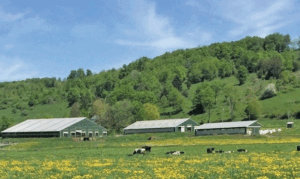
When Roland and Noella Hemond purchased a 150-acre dairy farm in 1945 in Minot, Maine, they milked 25 cows. Today, the R.E. Hemond Farm is home to 600 registered Holsteins and the family farms 800 acres. Family members play an active role in the daily operation of the farm: Noella is president and owner of the farm. Her daughter Lucille handles office work and their son Richard is the co-vice president. Richard’s son Rob is the herdsman, and Ann’s daughter Laurie handles animal records. Tom Cote, a long-time employee at the farm, manages the field work.
New Hampshire Dairy Farmer Panel — sharing expertise and ideas for the future
by the UNH CREAM Class, Becca Standish and Professor Drew Conroy
At the University of New Hampshire, the CREAM students spend an academic year managing a small herd of 20+ cows located at the Fairchild Dairy and Teaching Center in Durham, NH. This course is considered student centered, as students both manage the herd but also what they study related to dairy farming. The 2013 class invited farmers to come to campus to share their perspective on managing their farms. Below are the student’s questions to the panel and the farmers answers from the 2013 Spring Semester. Continue reading
Vermont dairy farmers testify about their current economic conditions
by Bethany M. Dunbar
MONTPELIER, VT — Dairy farmers told the Vermont Senate Agriculture Committee about their lives and farms at a hearing Friday, April 5.
Legislators heard that the Current Use program is critical, and that a methane digester on every farm would be good.
Current Use taxes farm and forest land at its working value for farming or forestry — as opposed to its fair market value which is usually much higher. In exchange for the savings, landowners are not allowed to develop the land enrolled in the program.
The difference between its value as working land and fair market value is made up by the state, which costs $54.6 million a year. About one-third of Vermont’s land is enrolled in the program. Continue reading